 Lujevit Editorial Team
If you’ve been reading about energy and healthy aging, you’ve probably seen “NAD supplement” on labels, in podcasts, and on IV-clinic menus. The term is used loosely, and the claims attached to it range from well-supported to wildly overstated. This guide covers what an NAD supplement is, what NAD stands for, what it does in your cells, and what the research supports, including where the science isn’t settled yet.
The short answer: An NAD supplement is a dietary supplement designed to support your body's levels of NAD+, a coenzyme your cells use to turn food into energy. Most don't contain NAD+ itself. Instead, they contain a precursor, usually nicotinamide riboside (NR), a form of vitamin B3, or nicotinamide mononucleotide (NMN), a compound your body makes from the same vitamin. Your cells convert both into NAD+.
What is NAD+? The helper molecule in every cell
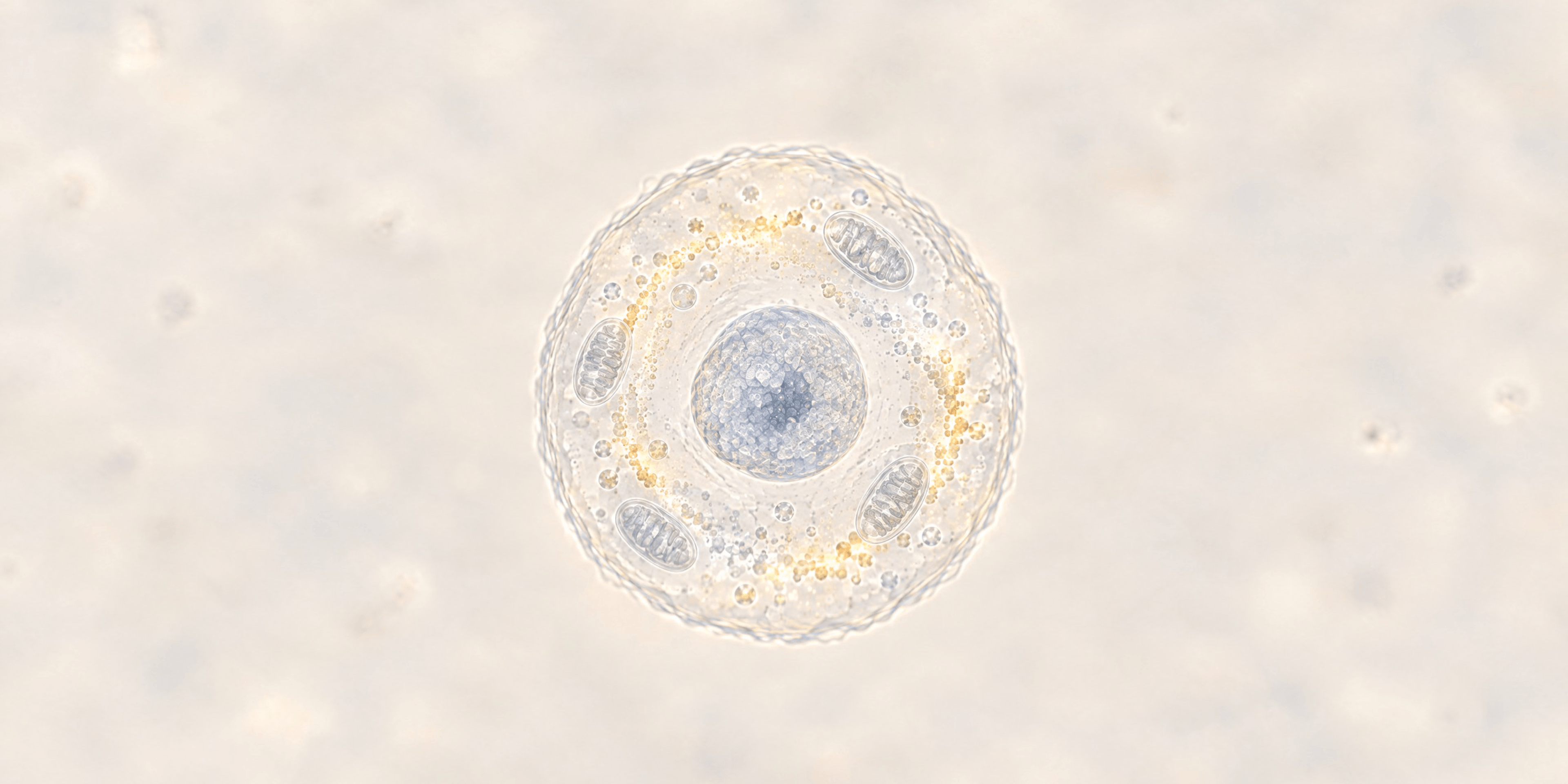
NAD+ is a coenzyme, a helper molecule enzymes need to work. Every living cell contains it. Beyond energy metabolism, NAD+ serves as a cofactor or substrate for hundreds of enzymes, and researchers are still studying many of these roles [1].
What NAD stands for
The NAD in "NAD supplement" stands for nicotinamide adenine dinucleotide. Each part of the name means something:
Nicotinamide is a form of vitamin B3.
Adenine is one of the building blocks of DNA and ATP, the cell's fuel.
Dinucleotide means two nucleotides joined together.
The "+" refers to the positive charge of its oxidized form, the one that's ready to accept electrons. When NAD+ picks up electrons, it becomes NADH. Because these supplements aim to raise NAD+ levels, “NAD supplement,” “NAD+ supplement,” and “NAD booster” all describe the same idea.
NAD+ and cellular energy: the mitochondrial connection
When you eat, your cells break food down step by step. Along the way, NAD+ acts as a shuttle: it picks up electrons released from nutrients, becoming NADH, and carries them to the electron transport chain inside your mitochondria, which drives the conversion of ADP into ATP. ATP fuels nearly everything your body does, from a heartbeat to a thought. This is what "cellular energy" means. It isn't the same as the alertness caffeine gives you. Caffeine works mainly by blocking tiredness signals in your brain. It changes how awake you feel, not the way your cells make ATP.
Other jobs of NAD+: DNA repair and cell communication
NAD+ isn't only an energy carrier. It also helps regulate how DNA is repaired and packaged, how cells respond as they age, and how immune cells work. Two enzyme families matter most here:
PARPs help repair damaged DNA. They use up NAD+ as they work.
Sirtuins help cells respond to stress and regulate metabolism. They also consume NAD+ in the process.
Unlike in energy production, where NAD+ is recycled, these enzymes break it down, so your cells have to keep making more [1].
Why NAD+ comes up in midlife
Interest in NAD+ comes from a recurring finding in aging research. NAD+ levels in tissues and cells tend to fall gradually with age in many species, including rodents, and in some human tissues. One explanation is an imbalance: during aging, NAD+ breakdown can outpace the cell's ability to make NAD+ or recycle it. One enzyme in particular, CD38, becomes more abundant in multiple tissues with age and is a major consumer of NAD+ [1].
The human picture is less tidy than marketing suggests. A study of human skin samples found a strong negative correlation between NAD+ levels and age in both men and women [2]. Most imaging studies of the brain have found lower NAD+ in older adults [13, 14], while one study using magnetic resonance spectroscopy found no difference in muscle or brain NAD+ between young and older adults [3]. Whether NAD+ declines, and by how much, appears to vary by tissue and measurement method. That's why you won't see us quote a specific percentage.
Why midlife? That's often when people notice their energy doesn't bounce back like it used to, and they start looking for answers. Tiredness can have many causes: poor sleep, stress, low iron, thyroid issues, hormonal changes, or medications. NAD+ is one piece of the puzzle, not the answer to every symptom. If your fatigue is new or persistent, talk to your doctor before starting a new supplement.
How NAD supplements work: precursors vs. NAD+ itself
Your body makes NAD+ from vitamin B3 and from tryptophan, an amino acid found in protein-rich foods. Because the body can convert tryptophan into NAD+, nutrition guidelines count it toward your daily vitamin B3 intake [10]. An NAD supplement gives your body more of these building blocks to work with.
Nicotinamide riboside (NR)
NR is a form of vitamin B3 and an NAD+ precursor. Of the two newer precursors sold as NAD+ supplements, NR and NMN, NR has the longer record in human trials. In the first human pharmacokinetic study of NR, single doses of 100, 300, and 1,000 mg produced dose-dependent increases in blood NAD+ metabolites [4]. Since then, human trials have tested daily doses ranging from about 100 mg to 2,000 mg, mostly over weeks to a few months.
NMN
Your cells convert NR into NMN, then NMN into NAD+. That puts NMN one step closer to NAD+ in the production pathway. A review of human studies found that researchers most often test three candidates for raising NAD+: NMN, NR, and NR combined with pterostilbene. Both NR and NMN raise blood NAD+ levels in humans, but well-designed head-to-head comparisons of their health effects remain scarce.
NMN has also had a complicated regulatory history in the US. In 2022, the FDA took the position that NMN could not be sold as a dietary supplement, then reversed course on September 29, 2025, confirming that NMN is lawful for use in dietary supplements [12].
Why most supplements use a precursor
NAD+ is a large molecule, and the digestive tract mostly breaks it down before it can be absorbed intact. Precursors are smaller, and cells can take them up and assemble NAD+ themselves.
Even with precursors, the route isn't as direct as it's often drawn. Research, mostly in mice, suggests that much of the NR you swallow is converted in the gut, partly by gut bacteria, into other forms of vitamin B3 before it reaches the rest of the body [15]. Blood NAD+ still rises reliably, as the research section below shows. It's simply a more indirect path than "swallow it, it goes straight into your cells."
What an NAD supplement is used for (and what it isn't)
People take NAD supplements as a daily habit to help support healthy NAD+ levels.* Since NAD+ is central to how cells produce energy, the goal is to promote cellular energy production and mitochondrial function as part of a healthy-aging routine, alongside sleep, movement, and good nutrition.*
What an NAD supplement isn't:
Not a stimulant. It works at the cellular level and doesn't give you a jolt the way caffeine does.
Not a treatment for any disease, no matter what some clinics or ads imply.
Not a weight-loss product.
Not "anti-aging." Nothing in a bottle reverses aging.
Not a substitute for a medical evaluation of fatigue or any other symptom.
Not an overnight fix. Trials measure lab values over weeks, not how people feel the next morning.
What the research shows so far
Well established: raising NAD+ levels
Oral NR reliably raises NAD+ in human blood. This is the best-supported finding in NAD supplement research:
Martens et al., 2018: In a randomized, double-blind, placebo-controlled crossover trial in healthy middle-aged and older adults, six weeks of NR raised no safety concerns and increased NAD+ levels in blood cells [5].
Conze et al., 2019: In an eight-week placebo-controlled trial, 100, 300, and 1,000 mg of NR per day raised whole-blood NAD+ in a dose-dependent way within two weeks, and the increases held for the rest of the study [6].
Still being studied: longer-term outcomes
The open question is whether raising blood NAD+ levels changes how people function or feel. So far, the answer is unclear:
Damgaard & Treebak, 2023: A critical review of 25 published human NR studies concluded that oral NR has shown few clinically relevant effects so far. The most reproducible signal was lower blood inflammatory markers, and there was no indication that oral NR increases muscle NAD+ [7].
Freeberg et al., 2023: A review of NAD+ precursor trials noted that dosing regimens and study durations vary widely, and small sample sizes make physiological results hard to interpret [8].
The honest summary: NAD+ precursors reliably achieve the first step, which is raising NAD+ levels in the blood. Whether that leads to changes you'd notice day to day is still being researched, and large, long-term outcome trials are still lacking.
Formats: capsules, liposomal, injections, and IV
Capsules and powders (oral precursors). This is the most-studied route. Nearly all human trials of NAD+ precursors have used oral NR or NMN. It's also the most practical for a daily routine.
Liposomal NAD+. This is NAD+ wrapped in lipid layers and marketed for better absorption. Published placebo-controlled human data are limited, so the absorption claims are hard to verify.
Injections and IV. These deliver NAD+ directly. IV drips are given in a clinic and often take several hours, while injections are quicker and can be given in a clinic or, with a prescription, at home. The first published study of an NAD+ infusion in people, a small pilot in healthy men, found that NAD+ disappeared from the blood almost as fast as it was infused, broken down into other compounds, for at least the first two hours [9]. Controlled trials of IV NAD+ for general wellness in healthy adults are lacking.
For an everyday routine, an oral precursor is the most practical and best-studied option.
Safety and who should talk to a doctor first
In placebo-controlled trials, NR has been well tolerated. In the eight-week Conze trial, no one reported flushing, and adverse events did not differ significantly between the NR and placebo groups [6]. That sets NR apart from nicotinic acid, another form of B3, which can cause flushing at doses of 30 to 50 mg a day or more [10]. Most trials have lasted weeks to months, so long-term safety isn't established yet. If you notice any persistent side effects, such as digestive discomfort, stop taking it and check with your doctor.
Talk to your doctor before starting if you:
have a medical condition or take prescription medication, since supplements can interact with medications or interfere with lab tests;
are considering IV or injected NAD+.
NAD supplements are not recommended during pregnancy or breastfeeding, and they're labeled for adults 18 and over. If a product combines several ingredients, check each one, not just the NAD+ precursor.
How to evaluate an NAD supplement
Use this checklist before you buy:
Is the precursor named, with a dose? "NAD+ complex" or "proprietary blend" without milligrams doesn't tell you anything you can compare.
Is the dose in the range studied in humans? NR trials have most often used 250–1,000 mg per day.
Is it tested by an independent lab? Look for a Certificate of Analysis you can actually read.
Are the claims proportionate? Red flags include "FDA approved," "reverses aging," "clinically proven to boost energy," specific percentages of NAD+ decline with no source, and before-and-after photos.
How is it made? All US supplement makers must follow GMP manufacturing standards; a GMP-certified facility has also passed an outside audit. "FDA-registered facility" means the site is registered with the FDA and can be inspected. It does not mean the FDA has approved the product.
What else is in it? Does it duplicate something you already take, or replace several bottles?
Can you return it? A clear return policy shows the brand stands behind the product.
Where Lujevit fits. Lujevit centers on 500 mg of nicotinamide riboside chloride per serving, one of the most studied NAD+ precursors in human trials. It adds five compounds chosen for the systems NAD+ works with: CoQ10 to support mitochondrial energy production, three plant antioxidants, and spermidine to support the cell's natural renewal processes.* It's two capsules with breakfast. Lujevit is made in a GMP-certified, FDA-registered facility in the USA, tested by an independent lab, and backed by a 30-day money-back guarantee. See the full formula.
Frequently asked questions
Is NAD the same as NAD+?
Mostly, yes. "NAD" is the general name for the coenzyme, which exists in two forms: NAD+, which accepts electrons, and NADH, which carries them. In everyday use, "NAD supplement" and "NAD+ supplement" mean the same thing: a product designed to help support NAD+ levels.
Can you get NAD+ from food?
Not in a form your cells can use directly. Animal foods such as poultry, beef and fish supply much of their niacin as NAD and NADP, but digestion breaks these down into smaller B3 forms, so eating NAD doesn't deliver NAD+ intact to your cells. Your body uses B3 from foods such as fish, poultry, whole grains, and mushrooms, along with tryptophan from protein, to make its own NAD+ [10]. NR levels in food are very small compared with the doses used in studies.
Are NAD supplements FDA approved?
No. No dietary supplement is FDA approved. The FDA does not approve dietary supplements for safety, effectiveness, or labeling before they're sold, and it does not approve supplements to treat or prevent disease [11]. Some ingredients do have a regulatory record. For example, one crystalline form of NR chloride has GRAS status for use in foods, and its maker has filed two New Dietary Ingredient notifications with the FDA for use in supplements [6]. If a brand says "FDA approved," treat that as a red flag.
References
Covarrubias AJ, Perrone R, Grozio A, Verdin E. NAD+ metabolism and its roles in cellular processes during ageing. Nat Rev Mol Cell Biol. 2021;22:119–141. https://doi.org/10.1038/s41580-020-00313-x
Massudi H, et al. Age-associated changes in oxidative stress and NAD+ metabolism in human tissue. PLoS One. 2012;7(7):e42357. https://pubmed.ncbi.nlm.nih.gov/22848760/
Elhassan YS, et al. Nicotinamide riboside augments the human skeletal muscle NAD+ metabolome and induces transcriptomic and anti-inflammatory signatures in aged subjects: a placebo-controlled, randomized trial. bioRxiv. 2019 (preprint). https://doi.org/10.1101/680462
Trammell SAJ, et al. Nicotinamide riboside is uniquely and orally bioavailable in mice and humans. Nat Commun. 2016;7:12948. https://doi.org/10.1038/ncomms12948
Martens CR, et al. Chronic nicotinamide riboside supplementation is well-tolerated and elevates NAD+ in healthy middle-aged and older adults. Nat Commun. 2018;9:1286. https://doi.org/10.1038/s41467-018-03421-7
Conze D, Brenner C, Kruger CL. Safety and metabolism of long-term administration of NIAGEN (nicotinamide riboside chloride) in a randomized, double-blind, placebo-controlled clinical trial of healthy overweight adults. Sci Rep. 2019;9:9772. https://doi.org/10.1038/s41598-019-46120-z
Damgaard MV, Treebak JT. What is really known about the effects of nicotinamide riboside supplementation in humans. Sci Adv. 2023;9:eadi4862. https://doi.org/10.1126/sciadv.adi4862
Freeberg KA, et al. Dietary supplementation with NAD+-boosting compounds in humans: current knowledge and future directions. J Gerontol A Biol Sci Med Sci. 2023. https://pmc.ncbi.nlm.nih.gov/articles/PMC10692436
Grant R, et al. A pilot study investigating changes in the human plasma and urine NAD+ metabolome during a 6 hour intravenous infusion of NAD+. Front Aging Neurosci. 2019;11:257. https://doi.org/10.3389/fnagi.2019.00257
NIH Office of Dietary Supplements. Niacin: Fact Sheet for Health Professionals. https://ods.od.nih.gov/factsheets/Niacin-HealthProfessional/
US Food and Drug Administration. Facts about Dietary Supplements. https://www.fda.gov/news-events/rumor-control/facts-about-dietary-supplements
National Law Review. FDA Determines NMN Is Lawful in Dietary Supplements. 2025. https://natlawreview.com/article/fda-determines-nmn-lawful-dietary-supplements
Zhu XH, Lu M, Lee BY, Ugurbil K, Chen W. In vivo NAD assay reveals the intracellular NAD contents and redox state in healthy human brain and their age dependences. Proc Natl Acad Sci USA. 2015;112(9):2876-2881. https://doi.org/10.1073/pnas.1417921112
Bagga P, et al. Single-voxel 1H MR spectroscopy of cerebral nicotinamide adenine dinucleotide (NAD+) in humans at 7T using a 32-channel volume coil. Magn Reson Med. 2020;83(3):806-814. https://pmc.ncbi.nlm.nih.gov/articles/pmid/31502710
Liu L, et al. Quantitative analysis of NAD synthesis-breakdown fluxes. Cell Metab. 2018;27(5):1067-1080. https://doi.org/10.1016/j.cmet.2018.03.018
This article is for educational purposes and is not medical advice.
*These statements have not been evaluated by the Food and Drug Administration. This product is not intended to diagnose, treat, cure, or prevent any disease.

Share this post