

Energy conversion
NAD+ picks up electrons from the food you’ve eaten and delivers them to the mitochondria, where they’re used to make ATP.[3]

SCIENCE · EXPLAINER
NAD+ stands for nicotinamide adenine dinucleotide. It’s a coenzyme — a molecule that enzymes need in order to work — and it is present in every living cell, from yeast to you.
If a cell were a factory, NAD+ would be the worker who carries parts between stations. Without it, the line that turns food into energy stops, and so do several maintenance crews.
NAD+ picks up electrons from the food you’ve eaten and delivers them to the mitochondria, where they’re used to make ATP.[3]

Enzymes called PARPs use NAD+ when they respond to damage in DNA. They consume it in the process, which is one reason NAD+ demand is constant.[3]

Sirtuins — proteins involved in how cells respond to stress and regulate metabolism — only work when NAD+ is available.[3]
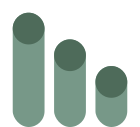
Enzymes that consume NAD+, such as CD38, become more active over time. [5]
The body’s ability to recycle NAD+ appears to slow. [5]
Studies in human tissue report lower NAD+ levels with age in liver, muscle, and skin. [5]
Conceptual: direction only, not measured values. Source: McReynolds MR et al., Experimental Gerontology, 2020.
You’ll see specific percentages online, like “NAD+ drops 50% by 50.” We don’t repeat them. The measured decline varies widely by tissue and method, and blood NAD+ levels are an imperfect marker. What’s consistent across studies is the direction: down.


NAD+ is poorly absorbed when swallowed, so most supplements use precursors your cells convert into NAD+.


The two most common precursors. NR has the longer human research record; recent comparisons suggest they perform similarly.[11]


The precursor and dose in Lujevit, within the range used in clinical trials.[1][2]


Liposomal, patch, and IV NAD+ have thinner evidence and different price points.
Raising NAD+ with oral NR is well established: randomized, placebo-controlled trials in adults show that 500–1,000 mg per day increases blood NAD+ metabolites and is well tolerated.[1][2]
What’s still unclear is how much that affects how you feel and function. Trials measuring blood pressure, metabolism, or physical performance have produced mixed results.[10] NAD+ precursors deliver on the mechanism. The rest is still an active area of research.

References [1][2][3][5][10][11] — see the list on the Science page.
Your cart is empty. Choose a pack to get started.
Subtotal$0.00
Shipping and taxes calculated at checkout.No. NAD+ is a coenzyme your body produces, mainly from forms of vitamin B3 such as niacin, nicotinamide, and nicotinamide riboside (NR). NMN is a closely related precursor.
Not directly. NAD+ is poorly absorbed when swallowed, but food provides the building blocks your body uses to make it, such as vitamin B3 and tryptophan. NR occurs naturally in milk, but only in trace amounts.
In studies, blood NAD+ levels rose within one to two weeks of taking NR daily.[1] What you notice, and when, varies from person to person, so consistent daily use matters.










 age →






 age →


 See the full formula

