 Lujevit Editorial Team

If you've read anything about healthy aging lately, you've probably come across some version of the claim "your NAD+ levels drop as you age." Often it comes with a dramatic percentage and a product ready to fix it. The research is more interesting than that, and the honest version is more useful. Some of it is well established, some is still being worked out, and a few findings may surprise you.
This guide covers what researchers mean by NAD+ decline, where it shows up, why blood tests may not tell you much, what supplements can and can't do, and a realistic way to think about aging well.
The short answer: NAD+ is a coenzyme your cells use to make energy and maintain themselves. Research in animals and humans shows that NAD+ tends to decline with age in several tissues, but the decline isn't uniform. It varies by tissue, by how it's measured, and possibly by sex. Supplements with NAD+ precursors reliably raise NAD+ in the blood. Whether that changes how you age is still an open question.
What Researchers Mean by "NAD+ Decline"
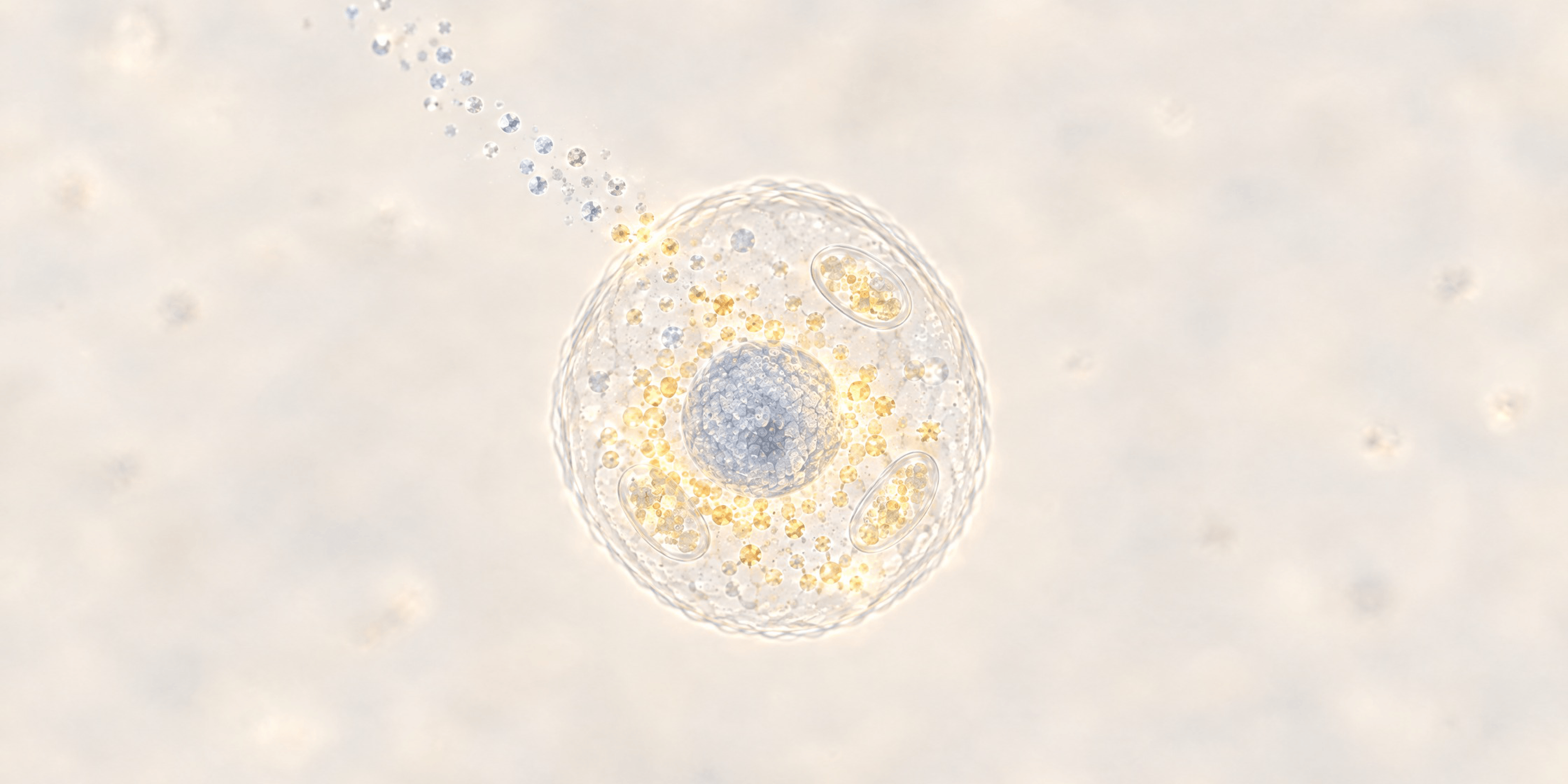
NAD+ (nicotinamide adenine dinucleotide) is a helper molecule found in every cell. It plays a central role in energy metabolism and influences many other cellular functions, including DNA repair, immune cell function and cellular senescence [1].
When researchers talk about "NAD+ decline," they mean a gradual drop in NAD+ inside tissues and cells over time. This pattern has been seen in many species, including rodents, and in some human tissues. The main explanation is an imbalance: during aging, NAD+ breakdown can outpace the cell's ability to make new NAD+ or recycle the old [1].
One of the clearest early human findings came from skin. A small study of skin samples from people of different ages found a strong negative correlation between NAD+ levels and age in both men and women. In other words, older skin tended to have less NAD+ [2].
Why the decline shows up more in some tissues
The human evidence is uneven. Different tissues tell different stories:
Skin: lower NAD+ with age in both men and women.
Muscle: mixed. One study found NAD+ was among the metabolites most clearly lower in older adults' muscle [3]. Another study, using magnetic resonance spectroscopy, found no difference in muscle NAD+ between young and older adults [4].
Brain: most imaging studies have found lower NAD+ in older adults [11, 12]; one found no difference [4].
Part of the explanation is that each tissue manages its NAD+ differently. The rates at which NAD+ is made and broken down differ widely from one tissue to another. Tissues also don't all use the same raw materials. The liver and kidneys can build NAD+ from tryptophan and nicotinic acid, while muscle relies on other routes [1].
What uses up NAD+ also changes with age. CD38, an enzyme that consumes NAD+, becomes more abundant in multiple tissues with age, and in mice it is considered a major driver of age-related NAD+ decline. In animal studies, this has been linked to low-grade inflammation that builds up in tissues such as fat and liver over time [1].
The limits of measuring NAD+ in blood
This is where the story gets genuinely surprising. Blood is the easiest place to measure NAD+, and that's why at-home NAD+ tests use it. But blood may be a poor window into what's happening in your tissues.
A large study in Frontiers in Endocrinology (2022) measured whole-blood NAD+ in 1,518 adults. In men, blood NAD+ trended lower with age. In women, it didn't differ significantly across age groups, and showed no trend like the men's [6].
A study in Nature Metabolism (2026) measured whole-blood NAD+ across seven independent groups of people. Blood NAD+ stayed remarkably stable with age and didn't change with lifestyle interventions. It did rise with nicotinamide riboside supplementation, as expected. The authors questioned whether blood NAD+ is useful as a marker of aging at all [7].
Diet affects blood NAD too. Red blood cell NAD falls when niacin (vitamin B3) status drops, so a blood result partly reflects what you eat [8].
Put together, a blood NAD+ number can't tell you how much NAD+ is in your muscles, brain or skin. A stable blood result doesn't mean nothing is changing in your tissues, and a lower one doesn't tell you why.
Why NAD+ Matters for Healthy Aging
Researchers pay attention to NAD+ because of the jobs it does. It's central to energy metabolism, and it's also used by enzymes involved in maintaining DNA and responding to stress. These processes are essential for keeping tissues working well and for healthy aging.
In animal models, restoring NAD+ improved a range of age-related measures. That's why the field is so active. But the leading researchers are also clear about what's missing. Major reviews note that much remains to be learned, including how to restore NAD+ during aging, whether doing so is safe, and whether it will benefit aging humans [1].
There's also a human finding that points to something you can influence directly. In a study of muscle biopsies, older adults who exercised regularly had muscle NAD+ levels closer to those of young adults. Physically impaired older adults had the lowest levels, and NAD+ correlated with average daily step count and with mitochondrial and muscle function. The study was cross-sectional, so it shows an association, not cause and effect [3]. Still, it suggests that how you live is tied to the same biology supplements are trying to support.
Can Supplements Raise NAD+ Levels?
Yes, in the blood. That part is well established. Most NAD+ supplements don't contain NAD+ itself. They contain a precursor, usually nicotinamide riboside (NR), that cells convert into NAD+.
In a randomized, placebo-controlled crossover trial in healthy middle-aged and older adults, six weeks of NR raised no safety concerns and increased NAD+ levels in blood cells [9].
In an eight-week trial, daily NR raised whole-blood NAD+ in a dose-dependent way within two weeks, and the increase held for the rest of the study [10].
Two honest caveats:
Blood isn't tissue. A critical review of 25 human NR studies found NR reliably raises NAD+ and related metabolites in the blood, but there's no indication that oral NR increases NAD+ in muscle [5].
Raising NAD+ isn't the same as changing how you age. The same review concluded that oral NR has shown few clinically relevant effects so far [5].
So, does an NAD supplement for aging make sense? It can be a reasonable way to help support healthy NAD+ levels* as part of a broader routine. It's not a way to reverse aging, and anyone telling you it is has gotten ahead of the evidence.
What We Still Don't Know
Here are the questions science hasn't answered yet:
What happens in your tissues. Measuring NAD+ in human muscle, brain or other organs requires biopsies or specialized imaging, so human tissue data are limited and sometimes conflicting.
Whether raising NAD+ changes outcomes. Most supplement trials have been small and short, and focused on safety and blood levels.
What happens over years. No long-term trials have followed people taking NAD+ precursors for many years.
What's different for women. There's very little evidence on sex differences in human NAD+. One large study found blood NAD+ fell with age in men but not in women, and researchers have speculated that sex hormones may explain the gap. But the 2026 study found no age change in blood at all, so whether there is a real sex difference is still open. We don't yet know how menopause affects NAD+ in tissues.
We think saying this openly matters more than pretending otherwise. If a brand can't tell you what isn't known, be cautious about what it says is known.
A Realistic Way to Think About Aging Well
If the goal is to keep your energy, strength and independence for decades, the biggest levers aren't in a bottle:
Move, daily and on purpose. One finding you can act on directly ties physical activity to muscle NAD+, though it shows an association, not cause [3]. Walking counts. Strength training counts. Consistency matters more than intensity.
Protect your sleep. It's when your body does much of its repair work, and it shapes how you feel every day.
Eat enough protein and B vitamins. Your body makes NAD+ from vitamin B3 and from tryptophan in protein. Most people in the US already get enough niacin from food [8].
Keep up with checkups. Thyroid, iron, B12, blood pressure and bone health matter more to how you feel at 50 and beyond than any single molecule.
A supplement can be one piece of that routine. It works best when it's simple enough to take every day and when your expectations match the evidence.
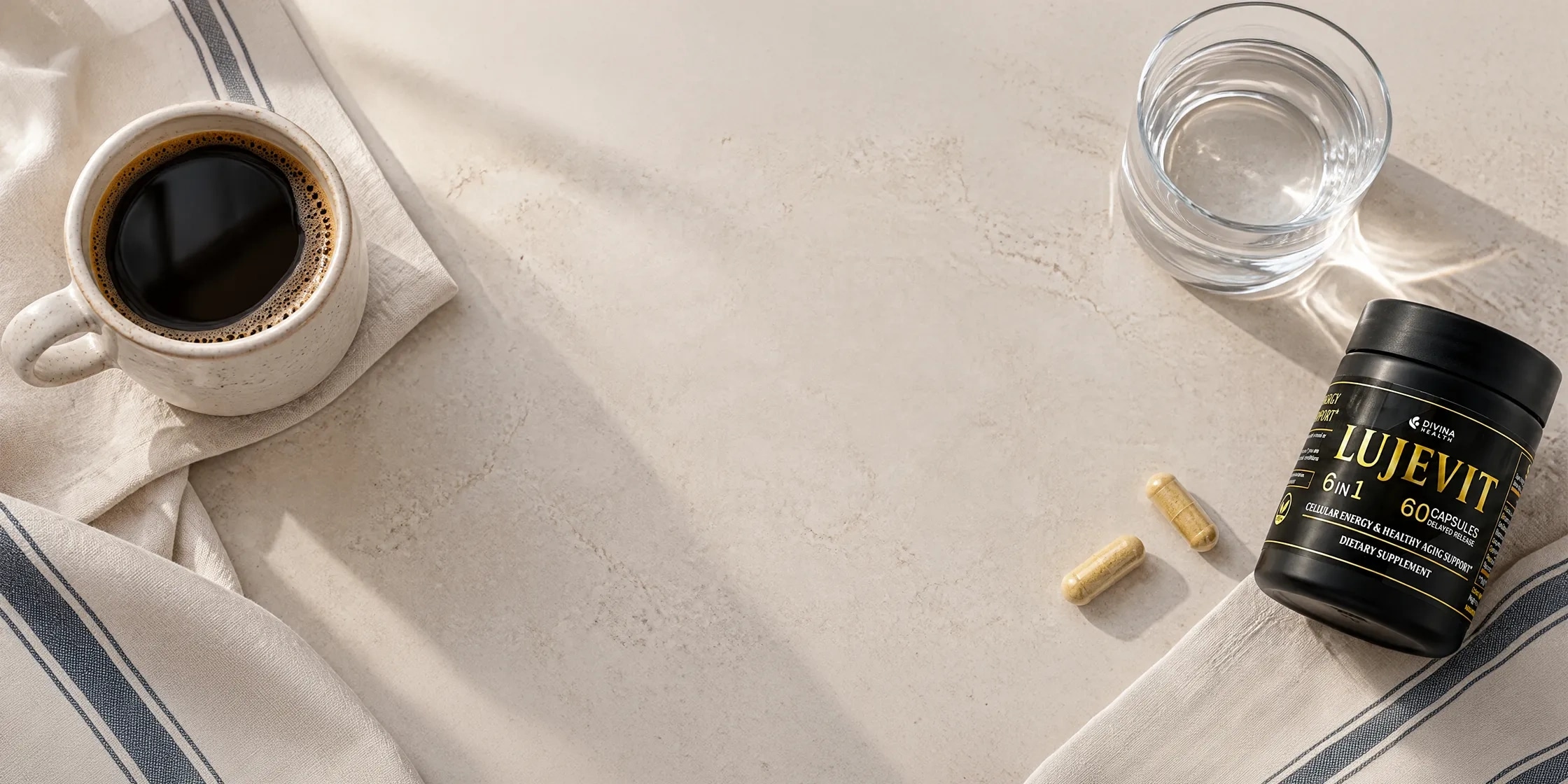
Where Lujevit fits. Lujevit starts with 500 mg of nicotinamide riboside chloride per serving, one of the most studied NAD+ precursors in human trials. It adds five compounds chosen for the systems NAD+ works with: CoQ10 to support mitochondrial energy production, quercetin phytosome, trans-resveratrol and pterostilbene for antioxidant support, and spermidine to support the cell's natural renewal processes.* It's designed to support cellular energy and healthy aging,* not to turn back the clock. Take two capsules with breakfast. See the full formula.
Frequently Asked Questions
Does NAD decline with age?
In general, yes. Research shows NAD+ tends to decline with age in several tissues in both animals and humans. But the decline isn't uniform. It's clearer in some tissues, such as skin, than in others. In blood, studies disagree, and in one large study women's blood NAD+ didn't change significantly with age. That's why we describe the decline as a general tendency and don't quote a specific percentage.
Should I test my NAD+ levels?
For most people, it's not very useful right now. At-home NAD+ tests measure blood, and recent research found that whole-blood NAD+ stays stable with age and lifestyle, which limits its value as a marker of aging. A blood result also can't tell you what's happening in your tissues. A conversation with your doctor about basics such as iron, B12 and thyroid function is usually more informative.
Does menopause affect NAD+?
We don't know yet. One study found that women's blood NAD+ didn't change with age while men's did, but a 2026 study across seven groups found no age change in blood at all, so it's unclear whether there's a real difference. This hasn't been studied directly, and data on menopause and tissue NAD+ are lacking. If you're in perimenopause or menopause and your energy or sleep has changed, talk to your doctor. There are well-studied options for menopausal symptoms.
Is an NAD supplement for aging worth it for women over 40?
It can be a reasonable choice if your expectations match the evidence. A supplement with an NAD+ precursor such as NR can help support healthy NAD+ levels.* It hasn't been shown to slow or reverse aging. Look for a published dose, independent lab testing and a return policy, and check with your doctor first if you take medication or have a medical condition. NAD+ supplements aren't recommended during pregnancy or breastfeeding.
References
Covarrubias AJ, Perrone R, Grozio A, Verdin E. NAD+ metabolism and its roles in cellular processes during ageing. Nat Rev Mol Cell Biol. 2021;22:119–141. https://doi.org/10.1038/s41580-020-00313-x
Massudi H, et al. Age-associated changes in oxidative stress and NAD+ metabolism in human tissue. PLoS One. 2012;7(7):e42357. https://pubmed.ncbi.nlm.nih.gov/22848760/
Janssens GE, et al. Healthy aging and muscle function are positively associated with NAD+ abundance in humans. Nature Aging. 2022;2:254–263. https://doi.org/10.1038/s43587-022-00174-3
Elhassan YS, et al. Nicotinamide riboside augments the human skeletal muscle NAD+ metabolome and induces transcriptomic and anti-inflammatory signatures in aged subjects: a placebo-controlled, randomized trial. bioRxiv. 2019 (preprint). https://doi.org/10.1101/680462
Damgaard MV, Treebak JT. What is really known about the effects of nicotinamide riboside supplementation in humans. Sci Adv. 2023;9:eadi4862. https://doi.org/10.1126/sciadv.adi4862
Yang F, et al. Association of human whole blood NAD+ contents with aging. Front Endocrinol. 2022;13:829658. https://doi.org/10.3389/fendo.2022.829658
Trętowicz MM, et al. Human whole-blood NAD+ levels do not vary with age or lifestyle interventions. Nat Metab. 2026. https://pure.amsterdamumc.nl/en/publications/human-whole-blood-nad-levels-do-not-vary-with-age-or-lifestyle-in/
NIH Office of Dietary Supplements. Niacin: Fact Sheet for Health Professionals. https://ods.od.nih.gov/factsheets/Niacin-HealthProfessional/
Martens CR, et al. Chronic nicotinamide riboside supplementation is well-tolerated and elevates NAD+ in healthy middle-aged and older adults. Nat Commun. 2018;9:1286. https://doi.org/10.1038/s41467-018-03421-7
Conze D, Brenner C, Kruger CL. Safety and metabolism of long-term administration of NIAGEN (nicotinamide riboside chloride) in a randomized, double-blind, placebo-controlled clinical trial of healthy overweight adults. Sci Rep. 2019;9:9772. https://doi.org/10.1038/s41598-019-46120-z
Zhu XH, Lu M, Lee BY, Ugurbil K, Chen W. In vivo NAD assay reveals the intracellular NAD contents and redox state in healthy human brain and their age dependences. Proc Natl Acad Sci USA. 2015;112(9):2876-2881. https://doi.org/10.1073/pnas.1417921112
Bagga P, et al. Single-voxel 1H MR spectroscopy of cerebral nicotinamide adenine dinucleotide (NAD+) in humans at 7T using a 32-channel volume coil. Magn Reson Med. 2020;83(3):806-814. https://pmc.ncbi.nlm.nih.gov/articles/pmid/31502710
This article is for educational purposes and is not medical advice.
*These statements have not been evaluated by the Food and Drug Administration. This product is not intended to diagnose, treat, cure, or prevent any disease.

Share this post